

 Official F1® licensed partner reseller
An ambitious idea
The race exists because Antony Noghès, president of the Automobile Club de Monaco, refused to take no for an answer. The ACM had been denied an upgrade from a regional to a national club because no major motorsport event took place entirely within the principality.
The Monte Carlo Rally, the club's existing event, was ruled out since much of it ran through other countries. With the support of Prince Louis II and the driver Louis Chiron, Noghès set out to create a race on the streets of Monte Carlo itself.
One of the greatest defensive drives in F1® history.
The first race, 1929
The first Monaco Grand Prix was run on 14 April 1929 as an invitation-only event.
It was won by William Grover-Williams in a Bugatti, on the narrow, winding streets that still make the race one of the most challenging and dangerous in the sport.
Into the championship era
Monaco was a round of the first F1® World Championship in 1950, and Juan Manuel Fangio won the race. The race took a one-year hiatus in 1951, and after a fatal accident in 1952 it left the calendar altogether.
It returned in 1955 and has held its place on the calendar permanently ever since.
Mr Monaco
Graham Hill earned the nickname Mr Monaco with five wins in the 1960s, the first driver to dominate the race. His record stood until 1993.
Hill remains the only driver to win the Triple Crown of the Monaco Grand Prix, the Indianapolis 500 and the Le Mans 24 Hours.
The Senna years
Ayrton Senna holds the record of six wins, five of them consecutive between 1989 and 1993.
The 1992 race produced one of the greatest defensive drives in F1® history, as Senna held off a faster Nigel Mansell for the final five laps.
Chaos and drama
The 1982 race became known as the Race No One Wanted to Win. In the closing laps the lead changed hands repeatedly through crashes, fuel trouble and mechanical failures, until Riccardo Patrese spun, stalled, restarted and won.
In 1955 Alberto Ascari missed the Nouvelle Chicane and plunged his Lancia into the harbour, escaping with a broken nose. Four days later he died in testing at Monza.
The circuit today
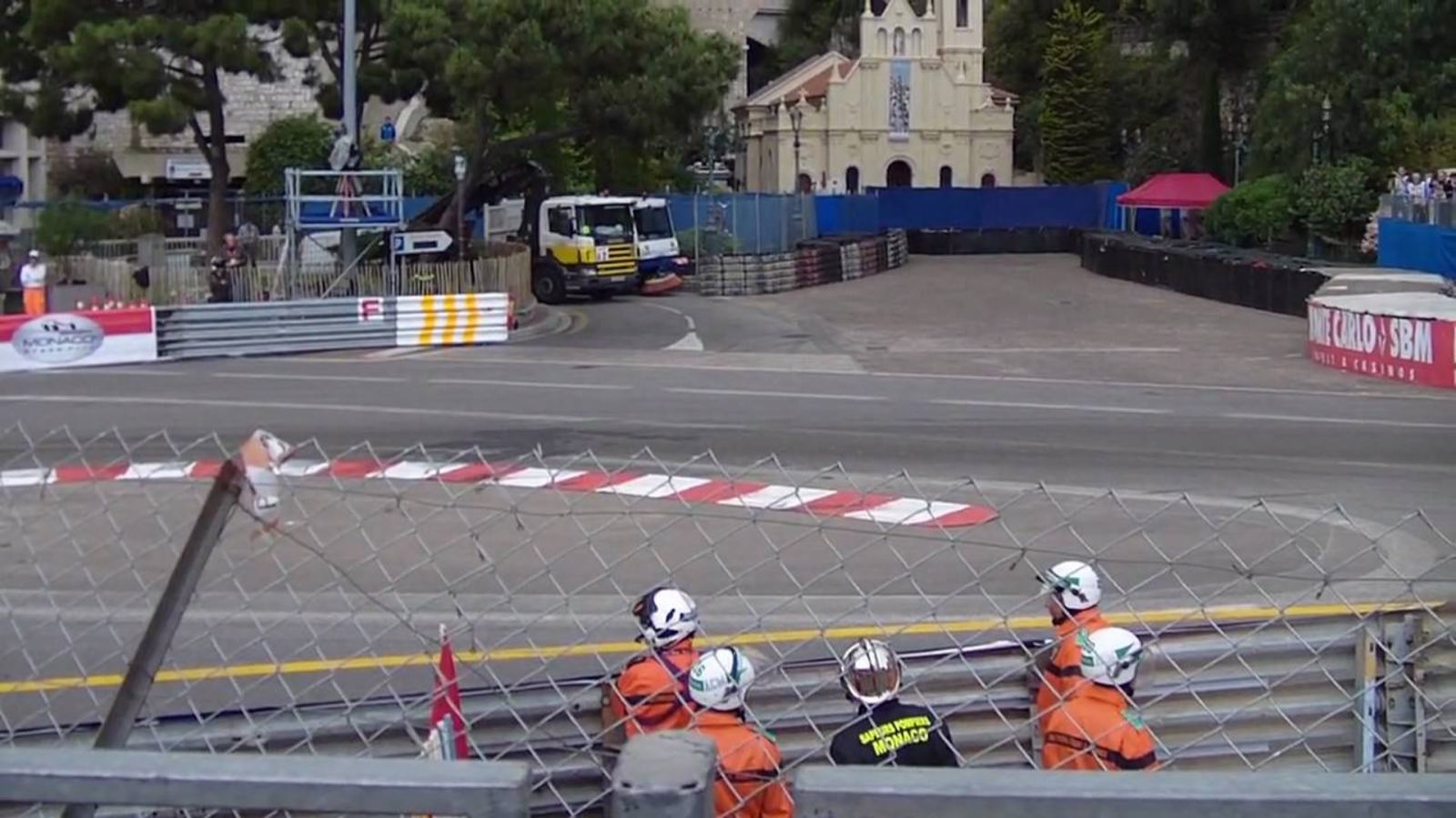
The Circuit de Monaco is a 3.337 km street circuit, essentially unchanged since the race began, considered the ultimate test of a driver's skill and precision.
Tight corners, elevation changes and an iconic tunnel make overtaking difficult, and with little runoff the pressure on qualifying is immense. Around it all, celebrities and royalty watch from the yachts and hotels that line the track.